

Skin pigmentation is one of the most common cosmetic concerns affecting both men and women. Uneven skin tone, dark patches, melasma, sunspots, acne marks, and hyperpigmentation can impact confidence and make individuals feel self-conscious about their appearance.
Fortunately, modern dermatological and laser treatments offer effective solutions for managing pigmentation and restoring clearer, healthier-looking skin.
Dr. Praveena Agarwal provides advanced aesthetic and laser treatments in Bhopal to help patients address pigmentation concerns safely and effectively.
What is Skin Pigmentation?
Skin pigmentation refers to changes in the natural color of the skin caused by excess melanin production.
Melanin is the pigment responsible for:
- Skin color
- Hair color
- Eye color
When melanin production becomes uneven, darker patches or spots may develop on the skin.
Common Types of Skin Pigmentation
Several forms of pigmentation affect the skin.
Hyperpigmentation
Darkening of specific areas due to increased melanin production.
Melasma
Brown or gray patches commonly seen on:
- Forehead
- Cheeks
- Upper lip
- Chin
Sunspots
Dark spots caused by prolonged sun exposure.
Post-Inflammatory Hyperpigmentation
Pigmentation left behind after:
- Acne
- Skin injuries
- Inflammation
Freckles
Small pigmented spots that may become more prominent with sun exposure.
Major Causes of Skin Pigmentation
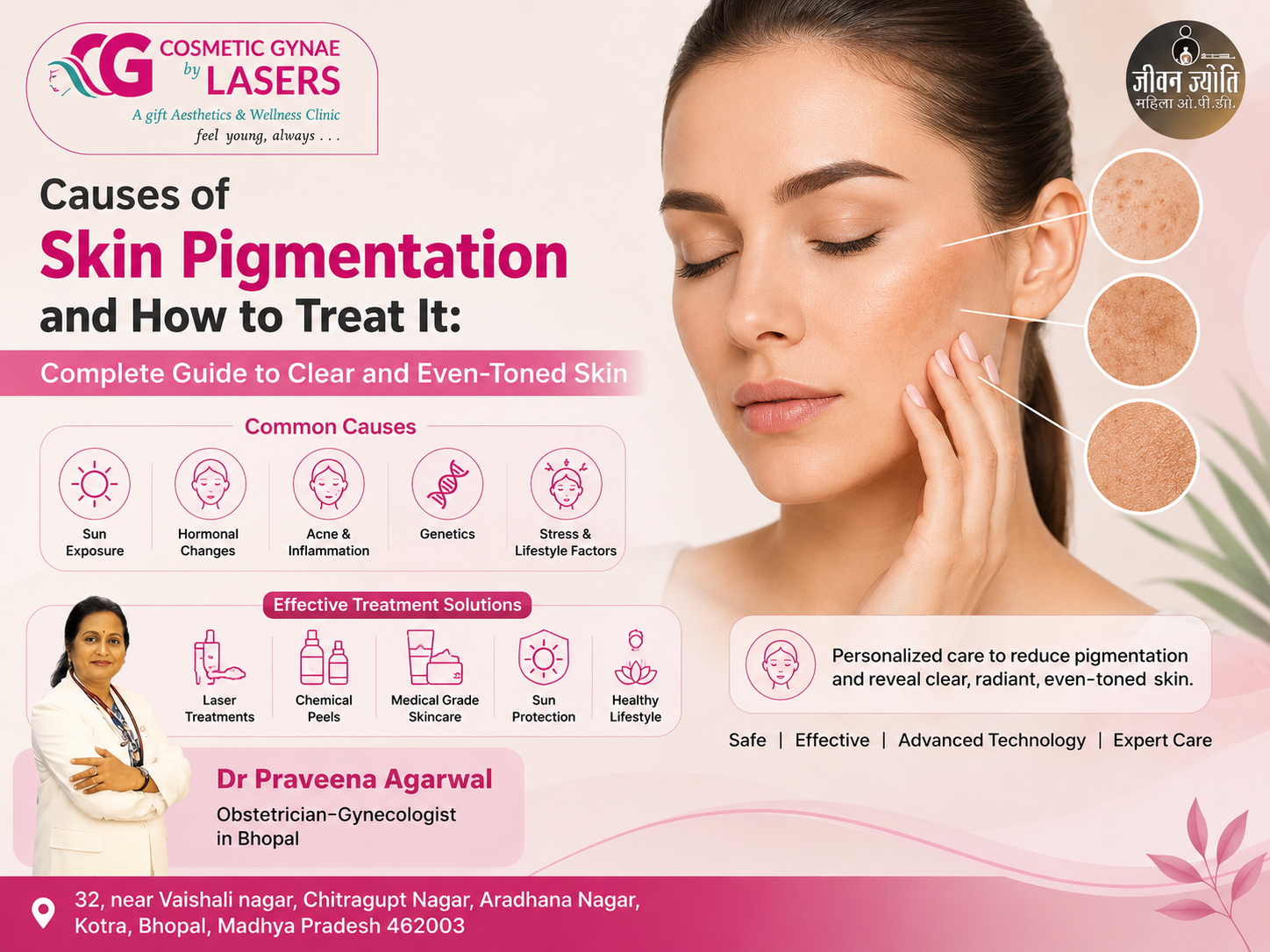
Excess Sun Exposure
Sun exposure is one of the leading causes of pigmentation.
Ultraviolet (UV) rays stimulate melanin production, leading to:
- Sunspots
- Uneven skin tone
- Dark patches
Hormonal Changes
Hormonal fluctuations can trigger pigmentation problems.
Common examples include:
- Pregnancy
- Birth control pills
- Hormonal disorders
Melasma
Melasma often develops due to a combination of:
- Hormonal influences
- Sun exposure
- Genetic predisposition
Acne and Skin Inflammation
After acne heals, dark spots may remain.
These marks can persist for months if not treated properly.
Aging
Natural aging can lead to:
- Uneven pigmentation
- Age spots
- Skin discoloration
Genetics
Some individuals are naturally more prone to pigmentation issues due to hereditary factors.
Symptoms of Pigmentation Problems
Common symptoms include:
- Dark patches
- Uneven skin tone
- Brown spots
- Facial discoloration
- Persistent acne marks
- Sunspots
The severity varies among individuals.
Why Professional Evaluation is Important
Different pigmentation conditions require different treatment approaches.
Professional Assessment Helps Identify:
- Underlying causes
- Pigmentation type
- Skin condition
- Appropriate treatment options
Accurate diagnosis improves treatment success.
Treatment Options for Skin Pigmentation
Topical Treatments
Certain medicated creams may help reduce pigmentation.
These treatments are often recommended for mild cases.
Chemical Peels
Chemical peels help:
- Remove damaged skin cells
- Improve skin texture
- Brighten skin tone
Laser Treatment
Advanced laser technology can target excess pigmentation while preserving surrounding tissues.
Q-Switch Laser Treatment
Q-Switch Laser is widely used for:
- Melasma
- Sunspots
- Pigmented lesions
- Uneven skin tone
The treatment helps break down excess pigment particles for gradual clearance.
Benefits of Laser Treatment for Pigmentation
Laser treatment offers:
- Non-surgical solution
- Improved skin clarity
- Reduced dark spots
- Minimal downtime
- Enhanced skin appearance
Many patients experience noticeable improvement after treatment.
Preventing Skin Pigmentation
Prevention plays an important role in maintaining healthy skin.
Recommended Measures Include:
Use Sunscreen Daily
Broad-spectrum sunscreen helps protect against UV damage.
Avoid Excessive Sun Exposure
Limiting direct sun exposure reduces pigmentation risk.
Maintain Proper Skincare
Healthy skincare routines support skin health.
Treat Acne Early
Prompt acne treatment reduces the risk of post-inflammatory pigmentation.
Who Can Benefit from Pigmentation Treatment?
Treatment may be beneficial for individuals experiencing:
- Melasma
- Acne marks
- Sun damage
- Uneven skin tone
- Hyperpigmentation
Personalized treatment plans provide the best outcomes.
Why Choose Dr. Praveena Agarwal for Pigmentation Treatment?
Patients choose Dr. Praveena Agarwal because of:
- Extensive medical experience
- Personalized care
- Advanced treatment options
- Modern laser technology
- Focus on safety and results
Every treatment plan is tailored to the patient’s unique skin condition.
Summary
Skin pigmentation can result from sun exposure, hormonal changes, acne, aging, and genetic factors. Fortunately, modern treatments including Q-Switch Laser therapy provide safe and effective solutions for improving skin tone and reducing pigmentation.
FAQs – Skin Pigmentation Treatment
What causes skin pigmentation?
Common causes include sun exposure, hormonal changes, acne, aging, and genetics.
Can pigmentation be treated?
Yes, many forms of pigmentation respond well to professional treatment.
What is Q-Switch Laser treatment?
It is an advanced laser procedure that targets excess pigment beneath the skin.
Does pigmentation return after treatment?
Proper skincare and sun protection help maintain results.
Is pigmentation treatment safe?
When performed by qualified professionals, pigmentation treatments are generally safe and effective.
Conclusion – Causes of Skin Pigmentation and How to Treat It
Causes of Skin Pigmentation and How to Treat It is an important topic for individuals seeking healthier, more even-toned skin. Through proper diagnosis, preventive care, and advanced treatment options such as Q-Switch Laser therapy, patients can effectively manage pigmentation concerns and restore confidence in their appearance.
